Enigma Menú #101
Junio 2025 / June 2025
Gracias por su reciente visita a Enigma de Albert Adrià y bienvenidos a nuestra minuta digital.
A continuación, les ofrecemos un recorrido por los platos que pudieron degustar con nosotros. Aquí encontrarán las fotos de su experiencia con explicaciones y algunas curiosidades.
Vuelvan a dar un paseo por nuestra manera de entender la gastronomía a través de los productos, su temporalidad y su mejor calidad. Gracias a ellos nos expresamos en un estilo personal donde la técnica muchas veces pasa inadvertida en favor de la búsqueda del ADN de cada producto.
En este menú digital no hemos incluido platos alternativos que se han realizado debido a alergias o intolerancias alimentarias.
Debido al constante cambio de platos ocasionado por la temporalidad es posible que haya alguna variación en el menú, no dispongamos de algunas fotos de calidad profesional.
Esperamos que hayan disfrutado y vuelvan a visitarnos para re-descubrir Enigma de Albert Adria
Thank you for your recent visit to Albert Adrià’s Enigma and welcome to our digital menu.
Below, we offer you a tour of the dishes you were able to taste with us. Here you will find the photos of your experience with explanations and some curiosities.
Take a walk through our way of understanding gastronomy through the products, their seasonality and their quality. Thanks to them we express ourselves in a personal style where technique often goes unnoticed in favor of the search for the DNA of each product.
Due to the constant change of dishes due to seasonality, there may be some variations in the menu, and some professional-quality photos may not be available.
We hope you enjoyed and come back to visit us to re-discover Albert Adria’s Enigma.
Porex de lima y sal
Una nube semiseca elaborada a partir de agua texturizada, ligera y delicada, que envuelve en su interior un relleno de inulina de lima.
La inulina es un carbohidrato de tipo fibra extraído de raíces y tubérculos como la achicoria, y se utiliza por su capacidad natural para espesar y aportar untuosidad sin añadir azúcares ni grasas. En este caso, se transforma en una crema ligera y cítrica que contrasta con la sequedad del exterior.
Lime "porex" & worm salt
A semi-dry cloud crafted from textured water, delicate and weightless, encasing a filling of lime inulin.
Inulin is a fiber-like carbohydrate derived from roots and tubers, commonly extracted from chicory. Valued for its natural thickening properties, it allows the creation of smooth purées and creams without the need for fats or sugars. Here, it becomes a light, citrusy cream that contrasts with the dry shell.
Nube helada de mezcalita
Una nueva evolución de un cóctel sólido que hemos reinterpretado en distintas ocasiones. En esta versión, presentamos una nube montada y helada elaborada a partir de una mezcalita —cóctel clásico de mezcal y lima— que se transforma en un bocado ligero, aromático y refrescante.
El conjunto se termina con una ralladura de piel de lima, que intensifica su carácter cítrico y realza la experiencia olfativa.
Frozen mezcalita "cloud"
An evolution of a solid cocktail concept we’ve explored in various forms. This version features a frozen, aerated cloudmade from a classic mezcalita —a blend of mezcal and lime— reimagined as a light, aromatic, and refreshing bite.
Finished with a touch of lime zest, which amplifies the citrus notes and enhances the aroma.
Tostada de primavera
Una hoja translúcida de obulato, pincelada con aceite de oliva virgen extra y clara de huevo, se convierte en el delicado soporte de esta creación.
En su interior, una base crujiente de quinoa y sésamo blanco tostado aporta textura y calidez.
Sobre la superficie, ligeros toques de inulina de vinagre de Jerez, hierbas frescas de primavera y una sutil ralladura de limón completan esta propuesta fresca, vegetal y aromática.
Spring toast
A translucent obulato sheet, brushed with extra virgin olive oil and egg white, forms the delicate foundation of this dish.
Inside, a crunchy layer of quinoa and toasted white sesame adds warmth and texture.
On top, fine touches of sherry vinegar inulin, spring herbs, and a hint of lemon zest bring freshness, brightness, and balance.
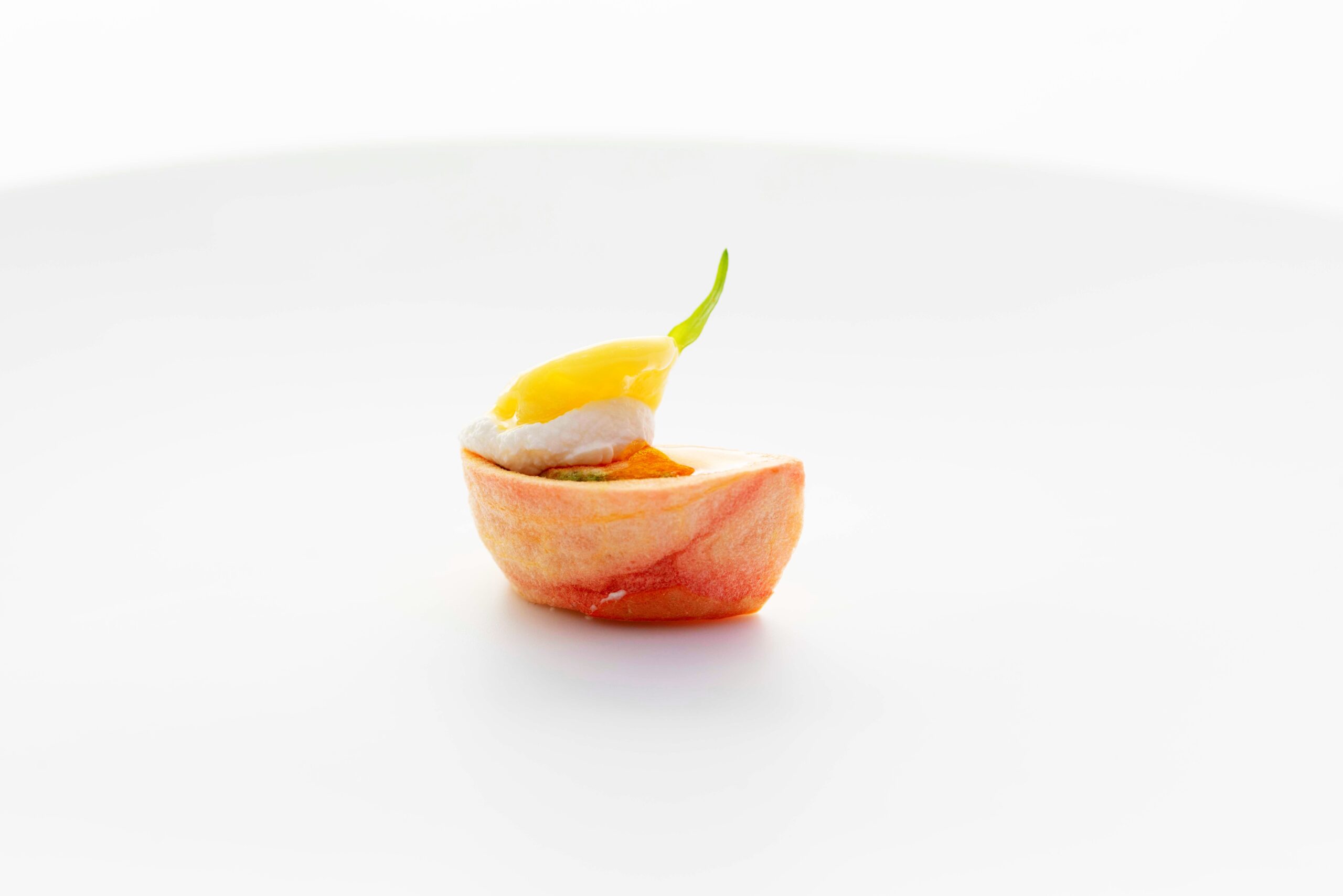
Tomate Amela
Tomate Amela liofilizado con sorbete helado de kumquat.
El tomate Amela nace en 1996 en Japón, significa “Dulce” en el dialecto japonés de la ciudad de Shizuoka.
Durante su cultivo realizado en el sur de Granada, se sacrifica el tamaño del tomate por un intenso aroma y sabor, agradable salinidad y umami. Es de textura tersa con una acidez que recuerda a un tomate de invierno o incluso a una fruta fresca.
Tiene un alto nivel de grados brix, nutrientes y aminoácidos, alcanzando grados de dulzura superiores a los de un tomate común.
Amela Tomato
Freeze-dried Amela tomato with kumquat ice cream sorbet.
The Amela tomato was born in 1996 in Japan, meaning ‘Sweet’ in the Japanese dialect of the city of Shizuoka.
During its cultivation in the south of Granada, the size of the tomato is sacrificed for its intense aroma and flavour, pleasant saltiness and umami. It has a smooth texture with an acidity reminiscent of a winter tomato or even a fresh fruit.
It has a high level of brix, nutrients and amino acids, reaching degrees of sweetness higher than those of a common tomato.
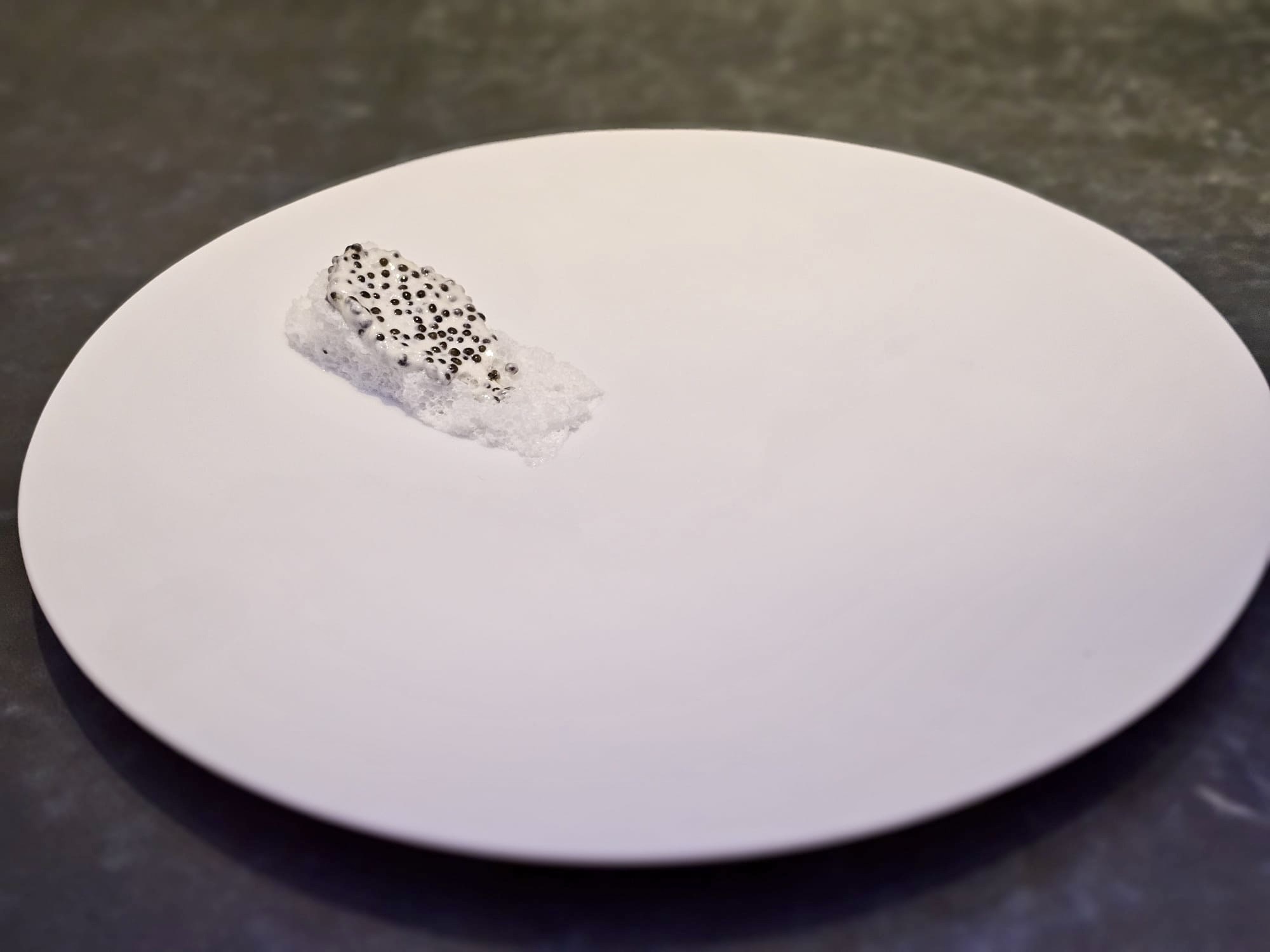
Nube helada de yogur y caviar
Sobre una nube helada formada por burbujas de crème fraîche congeladas, reposa la pureza blanca del yogur, suave y fresco como la brisa de invierno. Esta base etérea sostiene con elegancia unas perlas de caviar Schrenckii, nacido en las aguas profundas del río Amur, en la frontera entre China y Rusia. Su textura firme y su sabor a nuez y marcontrastan con la delicadeza láctea del conjunto, aportando profundidad y misterio. Es un plato que juega con el tiempo: lo efímero del hielo, lo ancestral del caviar. Un susurro helado que despierta los sentidos con cada bocado.
Frozen cloud of yogurt and caviar
Atop a frozen cloud made from crème fraîche bubbles turned to ice, rests the pure whiteness of yogurt, soft and fresh like a winter breeze. This airy base gently cradles delicate pearls of Schrenckii caviar, born in the deep waters of the Amur River, along the border of China and Russia. Its firm texture and flavor of nut and sea contrast with the lactic subtlety of the dish, adding depth and intrigue. A dish that plays with time: the fleeting nature of ice, the ancient soul of caviar. A frozen whisper that stirs the senses with every bite.
Foie gras curado en sal de anchoa
Foie gras de pato curado durante nueve minutos en sal de anchoa, un subproducto a menudo infravalorado pero rebosante de potencial culinario. Este breve curado no solo añade un delicado matiz salino y umami, sino que también transforma la textura del foie, creando un equilibrio cautivador entre su untuosidad característica y el ligero crujiente que aporta la costra de sal. La sal de anchoa impregna el lóbulo hepático con su profundo sabor marino, realzando cada bocado con notas sutiles de anchoa que se funden armoniosamente con la cremosidad natural del hígado de pato. En nuestra opinión, este método innovador demuestra una creatividad gastronómica excepcional, convirtiendo un ingrediente humilde en un agente realzador de sabores digno de los paladares más exigentes.
Foie gras cured in anchovy salt
Duck foie gras cured for nine minutes in anchovy salt—a byproduct often overlooked but brimming with culinary potential. This brief cure not only imparts a delicate saline brininess but also transforms the foie’s silky texture, creating an enticing interplay of melt-in-the-mouth richness and oceanic depth. The anchovy salt weaves its savory essence throughout the pâté, elevating each bite with subtle umami notes that harmonize beautifully with the natural creaminess of the duck liver. In our view, this innovative approach showcases exceptional gastronomic creativity, turning a humble curing agent into a flavor-enhancing marvel.
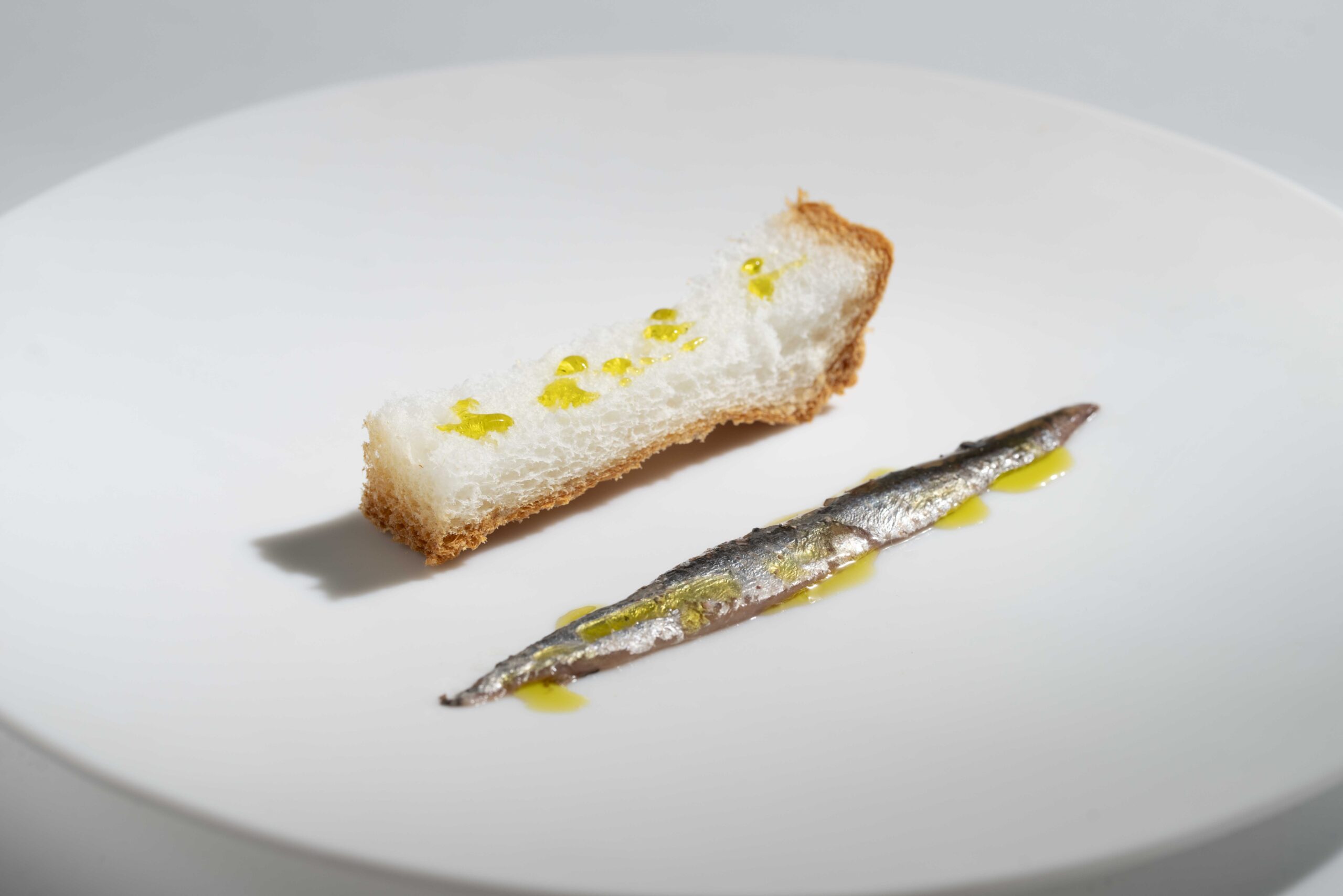
Anchoa del Cantábrico
Iniciamos la secuencia dedicada a la anchoa con una auténtica joya del Cantábrico: una anchoa San Filipo en salazón, de sabor profundo y textura sedosa.
Se presenta con lo que llamamos “pan casero”, aunque en realidad es un merengue salado elaborado a partir de agua de pan de aceite. Horneado lentamente, ofrece una textura crujiente por fuera y tierna en su interior, evocando el pan recién hecho desde una técnica completamente distinta.
La experiencia se completa con tomate rosetta y unas gotas de aceite umami, y se disfruta con la mano, en un gesto cercano y esencial.
Una entrada que honra la sencillez elevada a través de la técnica y el producto.
Cantabrian anchovy
We begin our anchovy sequence with a true Cantabrian gem: a salt-cured San Filipo anchovy, prized for its silky texture and deep umami flavor.
It is served with what we call “house bread,” though it is in fact a savory meringue made from olive oil bread water. Slowly baked, it achieves a crisp exterior and a soft, tender interior, evoking the essence of bread through unexpected technique.
Paired with rosetta tomato and a touch of umami oil, this bite is meant to be enjoyed by hand, creating an intimate, tactile connection with the dish.
A refined beginning that celebrates simplicity elevated through precision and product.
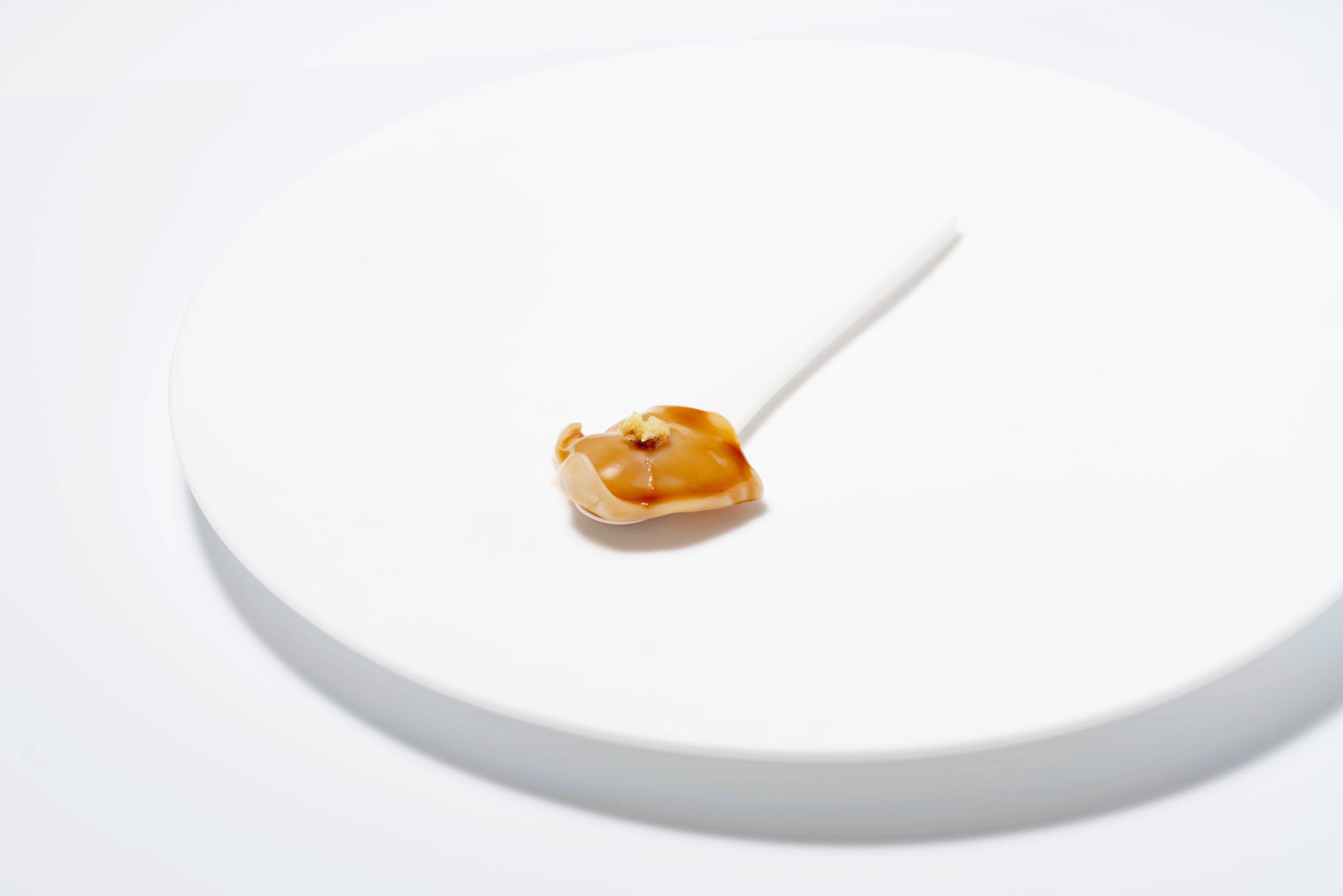
Casi mochi de mozzarella
Inspirado en el mochi japonés, este bocado parte del suero de mozzarella extraído por microondas.
Se texturiza con xantana, albúmina, metilcelulosa y gelatina para lograr elasticidad y ligereza.
La mezcla se carga en sifón y se hornea, creando una estructura aireada y suave.
El resultado es un falso mochi lácteo, cálido y elástico, de alma mediterránea.
Una reinterpretación técnica y delicada de un clásico oriental.
Mozzarella "almost" mochi
Inspired by Japanese mochi, this bite begins with mozzarella whey extracted via microwave technique.
It’s carefully textured with xanthan, albumin, methylcellulose, and gelatin for elasticity and lightness.
The mixture is siphoned and baked, creating a soft, airy structure.
The result is a warm, elastic, dairy-based “false mochi” with a Mediterranean soul.
A delicate, technical reinterpretation of an Eastern classic.
Thempe de garbanzos
Gelatina de agua de garbanzo y su espuma, garbanzo frito, aceite de menta y wasabi fresco, bajo el velo de thempe.
El tempeh es una joya gastronómica de raíces ancestrales, resultado de la fermentación natural de semillas de soja envueltas en una delicada trama de micelio, lo que le confiere una estructura compacta, un sabor terroso y una riqueza proteica sin igual. Su carácter sobrio y sofisticado lo convierte en un protagonista ideal tanto en preparaciones sencillas como en platos de alta cocina, siendo especialmente valorado en la alimentación vegetal por su perfil nutricional completo y su exquisita profundidad de sabor.
Thempe chickpea
Chickpea water jelly and its foam, crispy fried chickpeas, mint oil and fresh wasabi, beneath a veil of tempeh.
Tempeh is a culinary gem with ancestral roots, born from the natural fermentation of soybeans enveloped in a delicate web of mycelium. This process gives it a firm texture, an earthy flavor, and an unparalleled richness in protein. Its subtle yet refined character makes it an ideal protagonist in both simple preparations and haute cuisine dishes, especially valued in plant-based diets for its complete nutritional profile and exquisite depth of flavor.
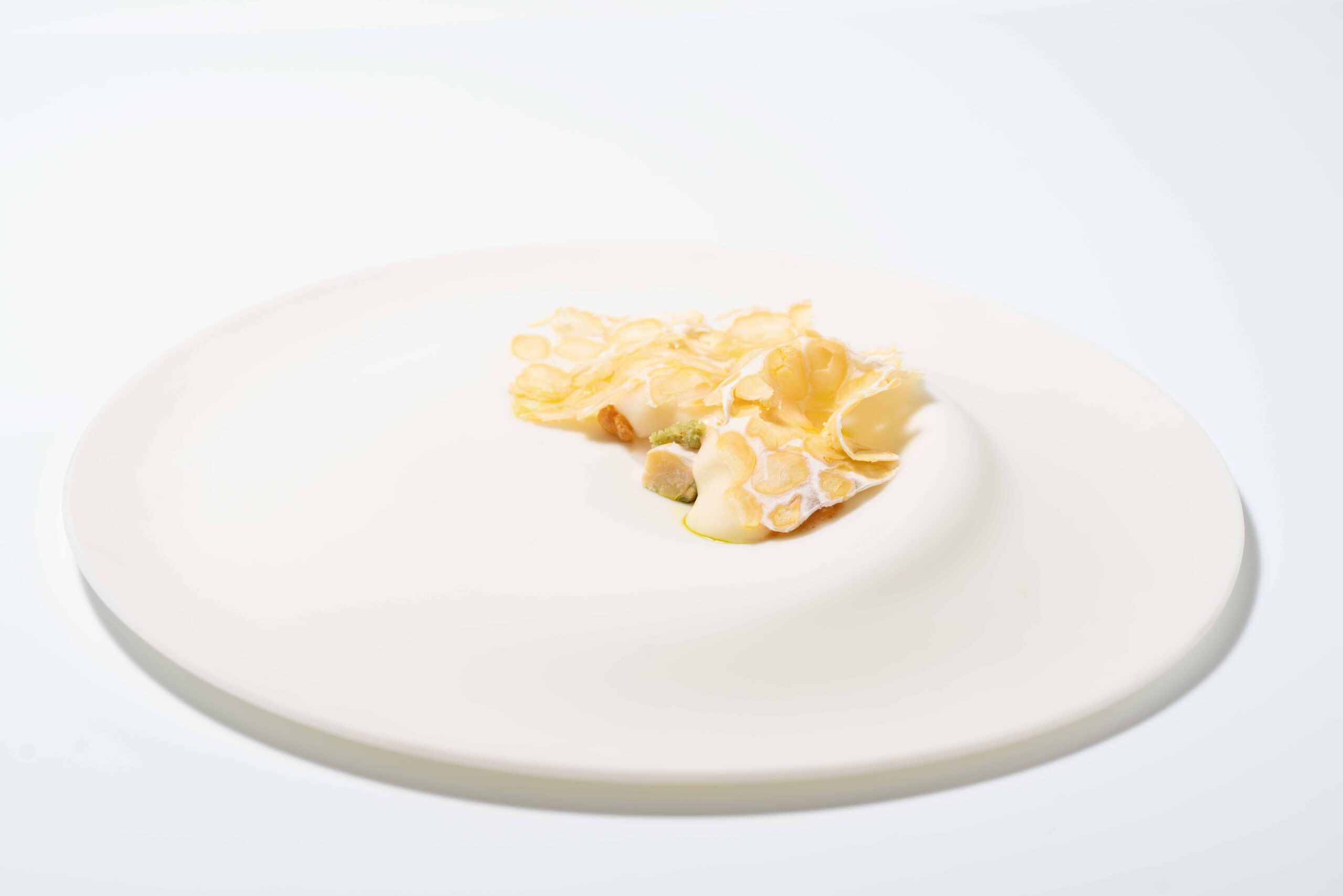
Espárrago
El nombre del plato nace de su estética singular, que recuerda a una pluma de bádminton por su forma ligera y estructurada.
El espárrago blanco se cocina al vacío, de forma firme y precisa, conservando su textura intacta. Luego se corta con cutter de precisión y se abre en forma de aspa, desplegando su forma característica.
Acompaña una gelatina elaborada a partir de una vinagreta de espárrago, con miso de espárrago, aceite de oliva virgen extra y piel de limón, que potencia su sabor vegetal y cítrico.
La experiencia se completa comiéndolo con las manos, girando suavemente la punta del espárrago sobre sí misma para recoger la gelatina, en un gesto intuitivo y elegante.
Asparragus
The name comes from its distinct visual form, reminiscent of a badminton shuttlecock, airy yet structured.
A white asparagus spear is cooked sous-vide to achieve a firm, defined texture, then precisely sliced with a cutter and opened in a cross-shaped fan, evoking its feathery appearance.
It is served with a gelled vinaigrette of asparagus, enriched with asparagus miso, extra virgin olive oil, and lemon zest, which amplifies its vegetal brightness and citrusy depth.
The dish is meant to be eaten by hand, gently twisting the tip of the asparagus over itself to gather the gelatin in a playful, intuitive motion.
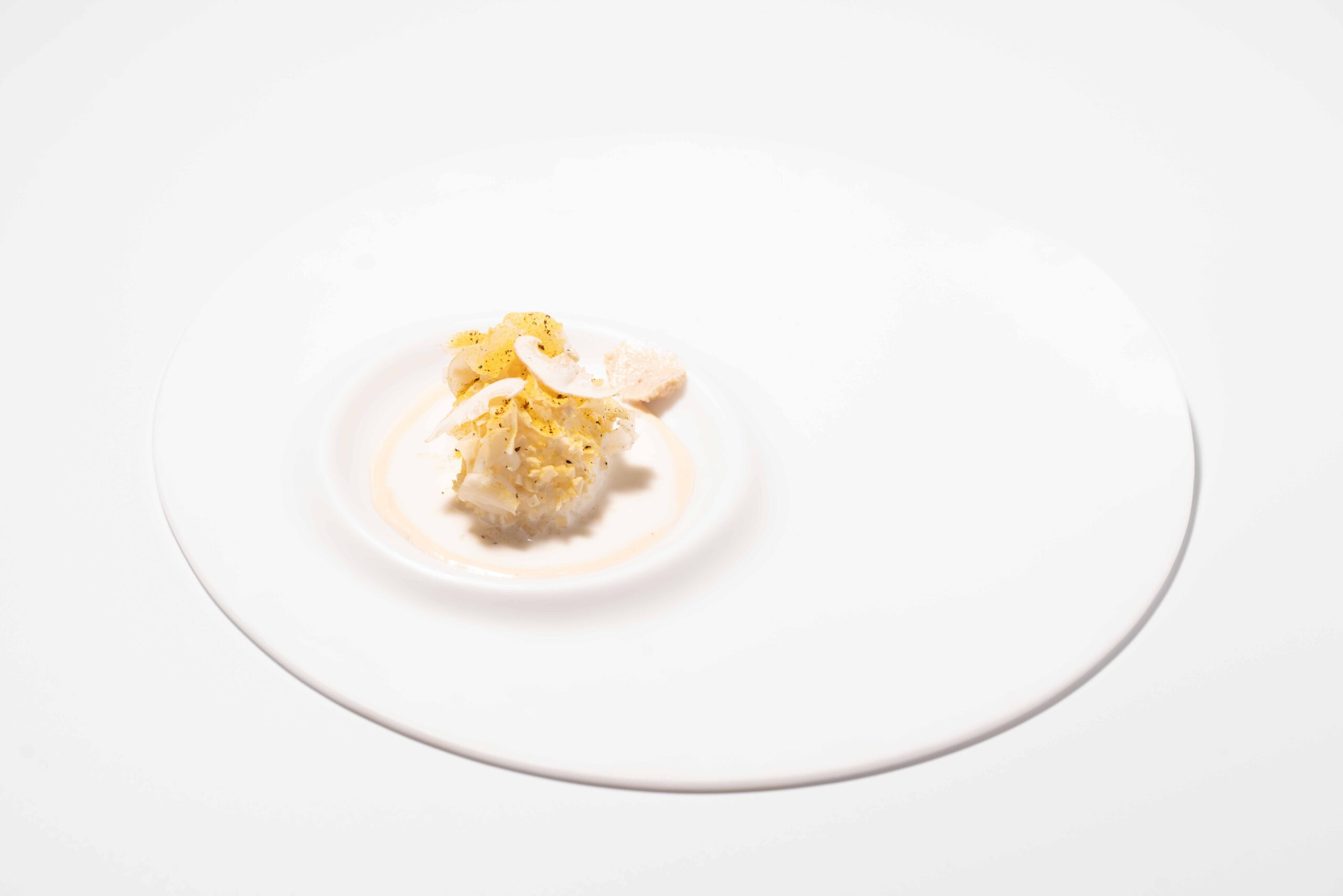
Perretxico, macadamia y huevas de rodaballo
Damos comienzo a la secuencia de las setas con un delicado juego de texturas y matices en torno al perretxico, la seta más emblemática del norte.
Una emulsión cálida y sabrosa sirve de base, acompañada por una nube de leche de macadamia, que aporta untuosidad y suavidad al conjunto.
Sobre ella, una espuma ligera de perretxico refuerza su carácter terroso y silvestre, evocando el bosque húmedo en primavera.
El plato se eleva con un contraste elegante: una tarama de huevas de rodaballo y limón deshidratado, que añaden notas salinas y cítricas para equilibrar y realzar el conjunto.
Perretxico with macadamia and turbot roe
We begin the mushroom sequence with a delicate interplay of textures and nuances, centered around the perretxico, the most iconic wild mushroom of the north.
A warm, savory emulsion forms the base, topped with a macadamia milk cloud that adds smoothness and gentle richness.
A light perretxico foam enhances its earthy, woodland character, evoking the misty forests of spring.
The dish is elevated with a refined contrast: turbot roe tarama and dehydrated lemon, introducing saline and citrus notes that bring brightness and balance.
"El ciclo de la vida"
Un plato conceptual que recorre la vida de la gamba, desde su juventud hasta su madurez, mostrando cómo su textura y sabor evolucionan con la edad —desde los 6 meses hasta los 2 años.
-
La gamba más joven, de menos de 6 meses, se sirve en sashimi, tierna y delicada.
-
A los 12 meses, su carne se transforma en un bocado acevichado, vibrante y cítrico.
-
Entre el año y los dos años, la gamba se cura en sal de shiso, concentrando su sabor con matices herbales.
-
La gamba más longeva se hierve suavemente en una infusión, resaltando su intensidad y textura carnosa.
-
El seso de gamba curado en sal aporta untuosidad y profundidad al conjunto.
Todo el recorrido se culmina con un generoso escabeche tradicional elaborado con cabeza de gamba, pensado para mojar pan y no dejar ni una gota.
Una narración comestible del mar y del tiempo.
“Life cycle of prawn”
A conceptual dish that traces the life of the prawn, revealing how its texture and flavor evolve with age —from 6 months to 2 years.
-
The youngest prawn, under 6 months, is served as sashimi, tender and pure.
-
At 1 year, it takes on a vibrant form, marinated in citrus as a ceviche.
-
Between 1 and 2 years, the prawn is cured in shiso salt, gaining complexity and herbal notes.
-
The oldest prawn is gently boiled in an infusion, emphasizing its depth and meaty texture.
-
Cured prawn brain enriches the dish with silkiness and marine intensity.
The journey concludes with a traditional head-of-prawn escabeche, generously poured —meant to be savored to the last drop, preferably with bread.
A sensory story of the sea and the passing of time.
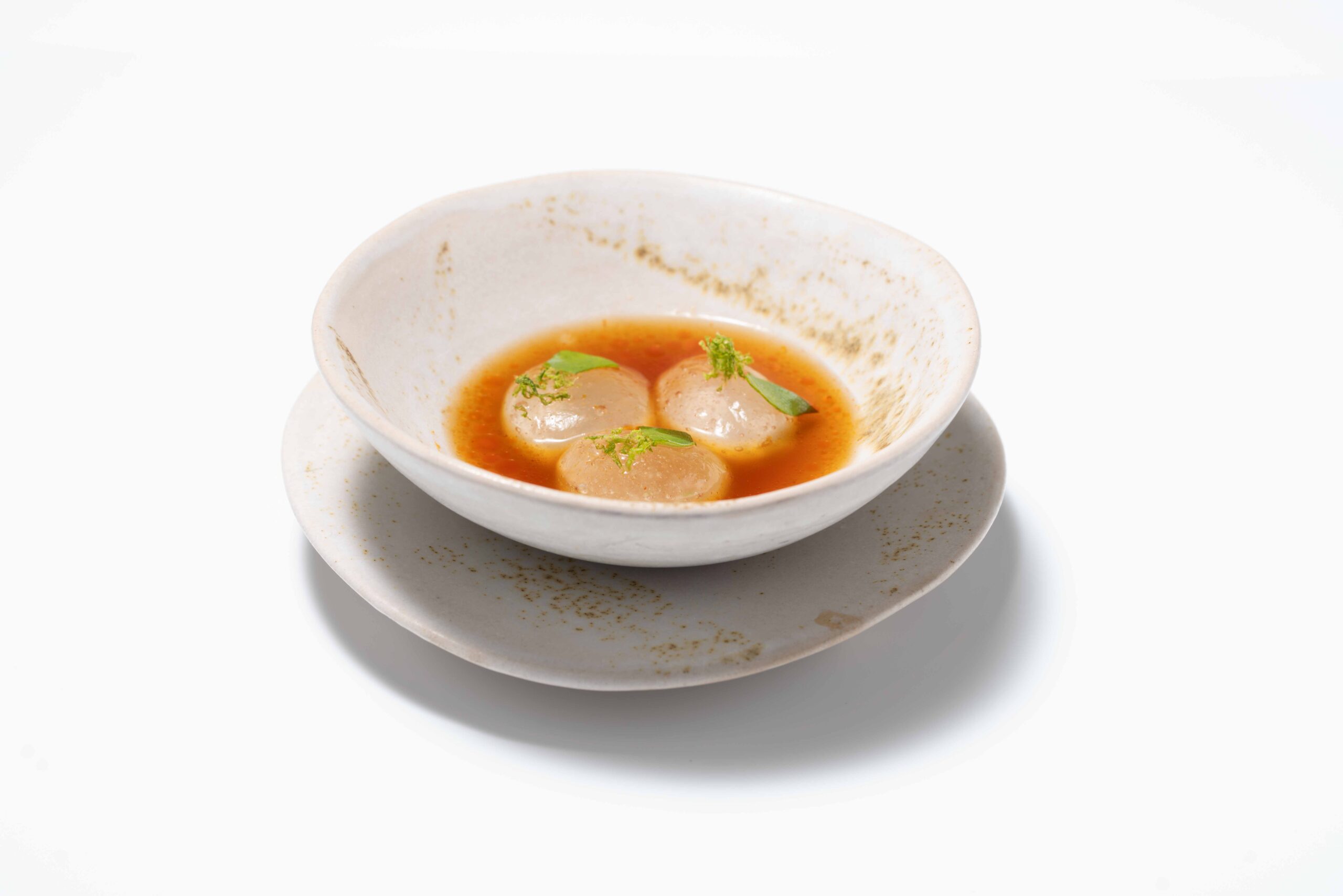
Oreja de cochinillo, Tang yuan
Partimos de una agua con harina de chuño, un método ancestral andino de liofilización natural, donde el frío y el sol transforman la patata intensificando su sabor.
En contacto con un caldo caliente de costilla de cerdo, la patata se liofiliza de forma natural, absorbiendo el fondo y modificando su textura.
Se acompaña de oreja de cochinillo cocinada a baja temperatura hasta obtener un equilibrio entre melosidad y crujiente, servida con un caldo de jamón ibérico que potencia su sabor y añade profundidad.
Pig's ear with ham jelly, Tang yuan
We start with water infused with chuño flour, a traditional Andean technique where potatoes are naturally freeze-dried through cycles of cold nights and sunny days, concentrating their flavor.
When combined with a hot pork rib broth, the potato freeze-dries naturally in the bowl, transforming in texture while absorbing the essence of the stock.
It is served with a slow-cooked pig’s ear, crisped on the outside and tender within, finished with a warm Iberian ham broth that deepens the flavor and adds umami.
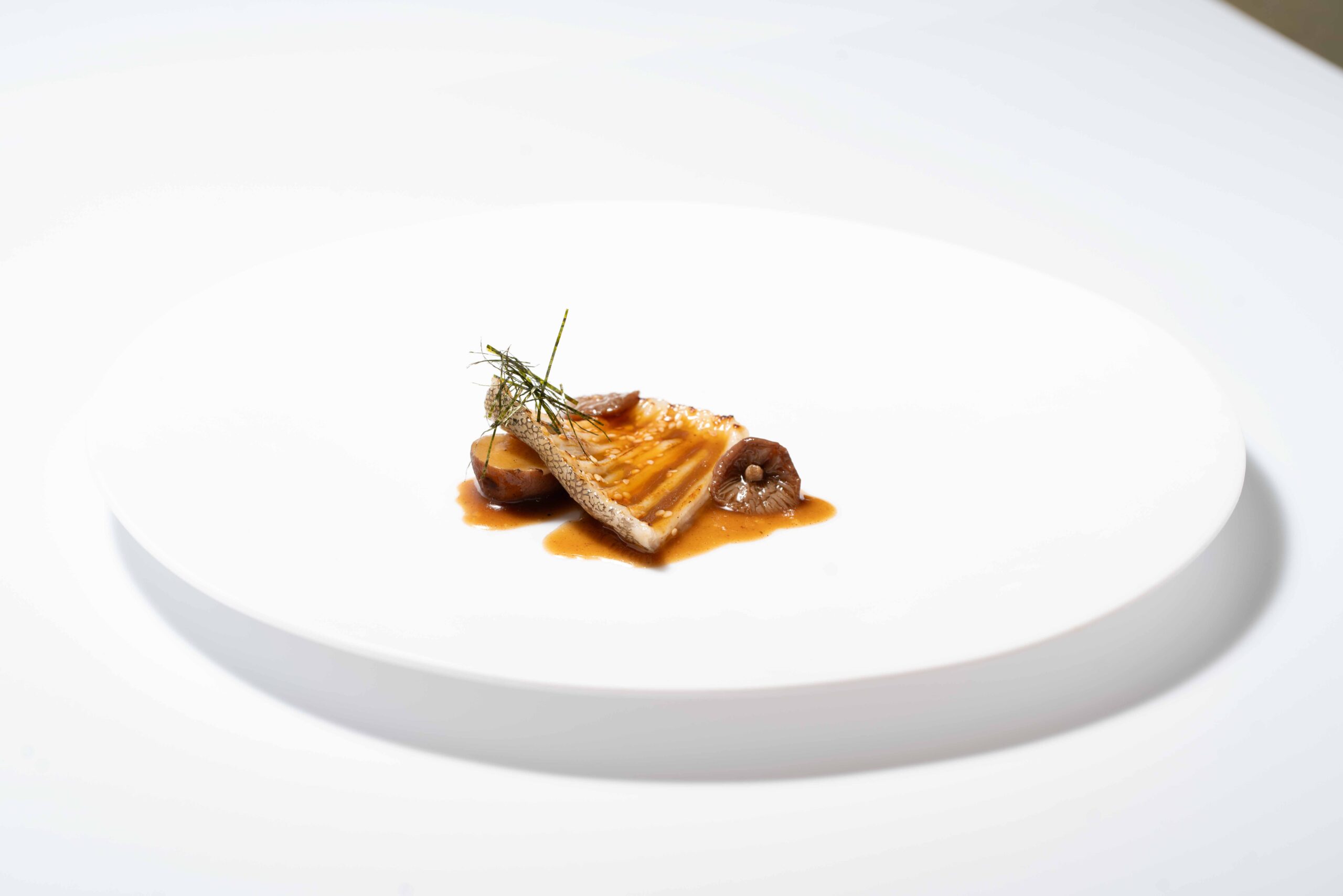
Raya zarandeada
Inspirado en la apariencia singular de la raya, este trampantojo nace de la observación y del deseo de transformar la ilusión en sabor.
Una pieza creativa que simula un corte de pescado, elaborada a partir de piel de bacalao, cuidadosamente trabajada, y cubierta por finos filamentos de espardenya superpuestos con precisión sobre la superficie, evocando la textura del pescado original.
Se acompaña de una salsa de rostit de pollo, un refrito de ajos, carreleta y alga nori, aportando umami, complejidad y profundidad marina.
Una pieza que engaña la vista y seduce al paladar.
Zarandeado style stingray
This trompe-l’œil dish is inspired by the unique texture and pattern of skate. It transforms visual illusion into culinary artistry.
Crafted from cod skin, carefully prepared and layered with delicate threads of espardenya (sea cucumber), it mimics the appearance and structure of a refined fish cut.
Served with a rich roast chicken jus, garlic confit, fairy mushroom and nori seaweed, this creation brings depth, umami, and a whisper of the sea.
A dish that deceives the eyes, but delights the senses.
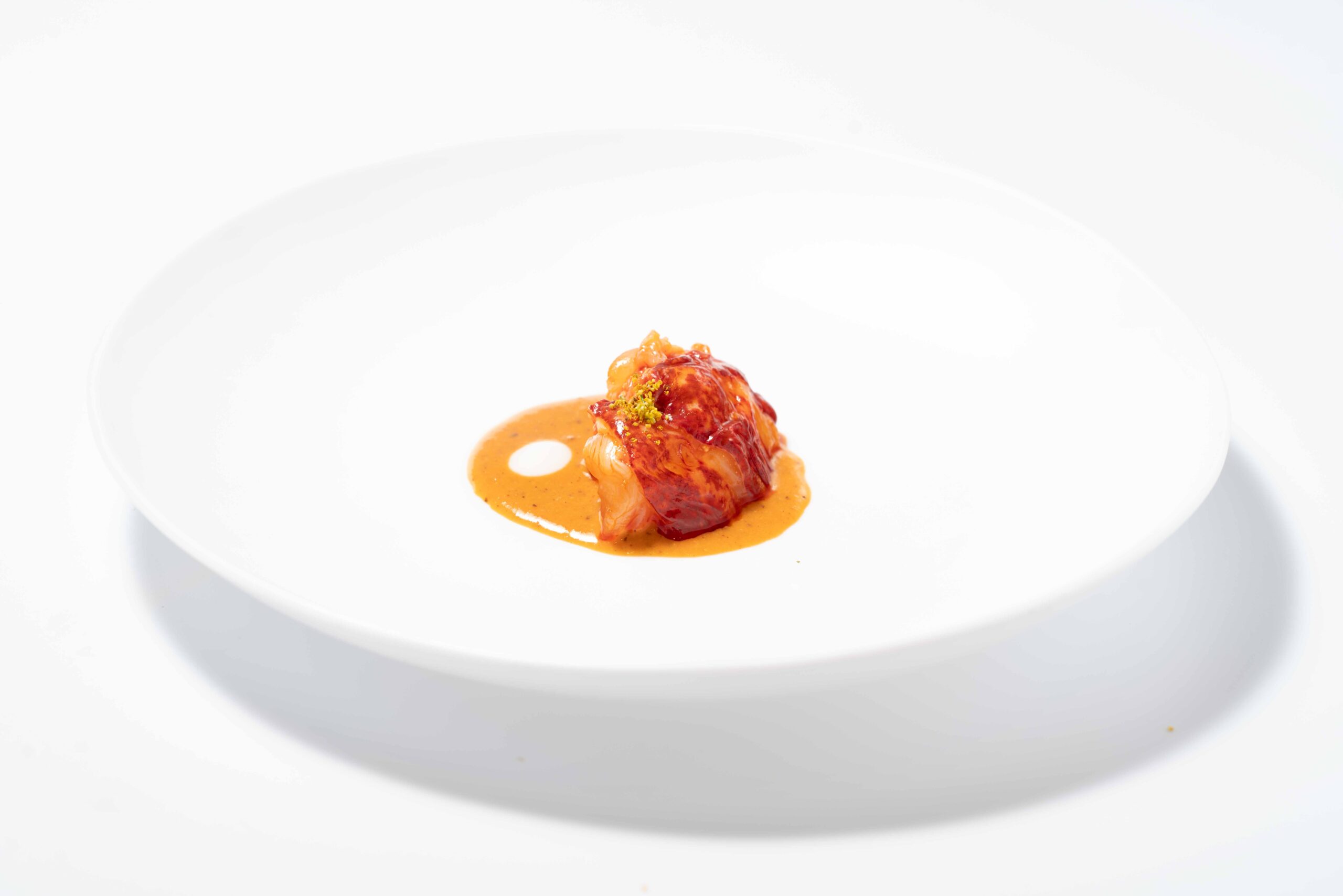
Bogavante gallego en dos secuencias
Primera secuencia
Presentamos una ensaladilla tibia elaborada con los corales y las pinzas del bogavante, acompañada de patata ligeramente chafada.
La mayonesa: está emulsionada únicamente con los propios corales del bogavante, potenciando así su sabor marino.
La cubrimos con un velo de piparra encurtida, que aporta acidez y un matiz fresco que equilibra la untuosidad del conjunto.
Segunda secuencia
El lomo del bogavante se confitó durante cuatro minutos en grasa de sobrasada, lo que le aporta un fondo especiado y untuoso, sin enmascarar su delicadeza.
Terminamos el pase en mesa, donde se sirve sobre una base caliente de salsa de queso Marianne, un queso artesanal gallego elaborado en Pontevedra.
Este queso, curado en heno durante tres meses, se elabora a mano con leche cruda de vaca y ofrece notas lácticas, herbáceas y una textura envolvente que redondea el plato.
Galician Lobster in Two Sequences
First sequence
We begin with a warm salad made from the lobster’s coral and claw meat, combined with lightly crushed potato.
The mayonnaise; it is emulsified solely with the lobster’s coral, enhancing its natural marine flavor.
It is topped with a delicate pickled piparra veil, adding a bright acidity that balances the richness of the dish.
Second sequence
The lobster tail is gently confited for four minutes in sobrasada fat, infusing it with subtle spiced notes while preserving its delicate texture.
The final touch is applied at the table, where it is served over a warm base of Marianne cheese sauce—an artisanal cheese from Pontevedra, Galicia.
Marianne is a farmhouse cheese made by hand from raw cow’s milk, aged in hay for three months. It brings a deep, herbal aroma and a creamy finish that beautifully complements the lobster.
Tuétano con lenteja caviar
Una elaboración delicada y profunda, donde la gelatina de tuétano de ternera actúa como hilo conductor de la untuosidad, coronada por un caviar ahumado con sarmientos que aporta notas intensas y evocadoras de la tierra y el fuego.
El conjunto se acompaña de una salsa de osobuco acidulada al estilo francés, que aporta equilibrio, frescor y un contraste sutil a la riqueza del plato.
El ahumado es una técnica ancestral que transforma los alimentos al exponerlos al humo generado por la combustión lenta de maderas nobles, sin resina. Este proceso no solo intensifica los sabores, sino que también modifica el color, el aroma y la textura, creando una experiencia sensorial única.
"Osobuco" bone marrow with caviar lentils
A refined and complex creation, where the beef marrow jelly brings richness and depth, topped with vine-shoot smoked caviar that adds earthy, smoky notes reminiscent of fire and tradition.
It is finished with a French-style acidulated osso buco sauce, offering balance, freshness, and a delicate contrast to the unctuous base.
Smoking is an ancient technique that transforms ingredients through exposure to smoke from the slow burning of non-resinous woods. This method enhances flavor, alters texture and color, and delivers a multisensory experience that lingers.
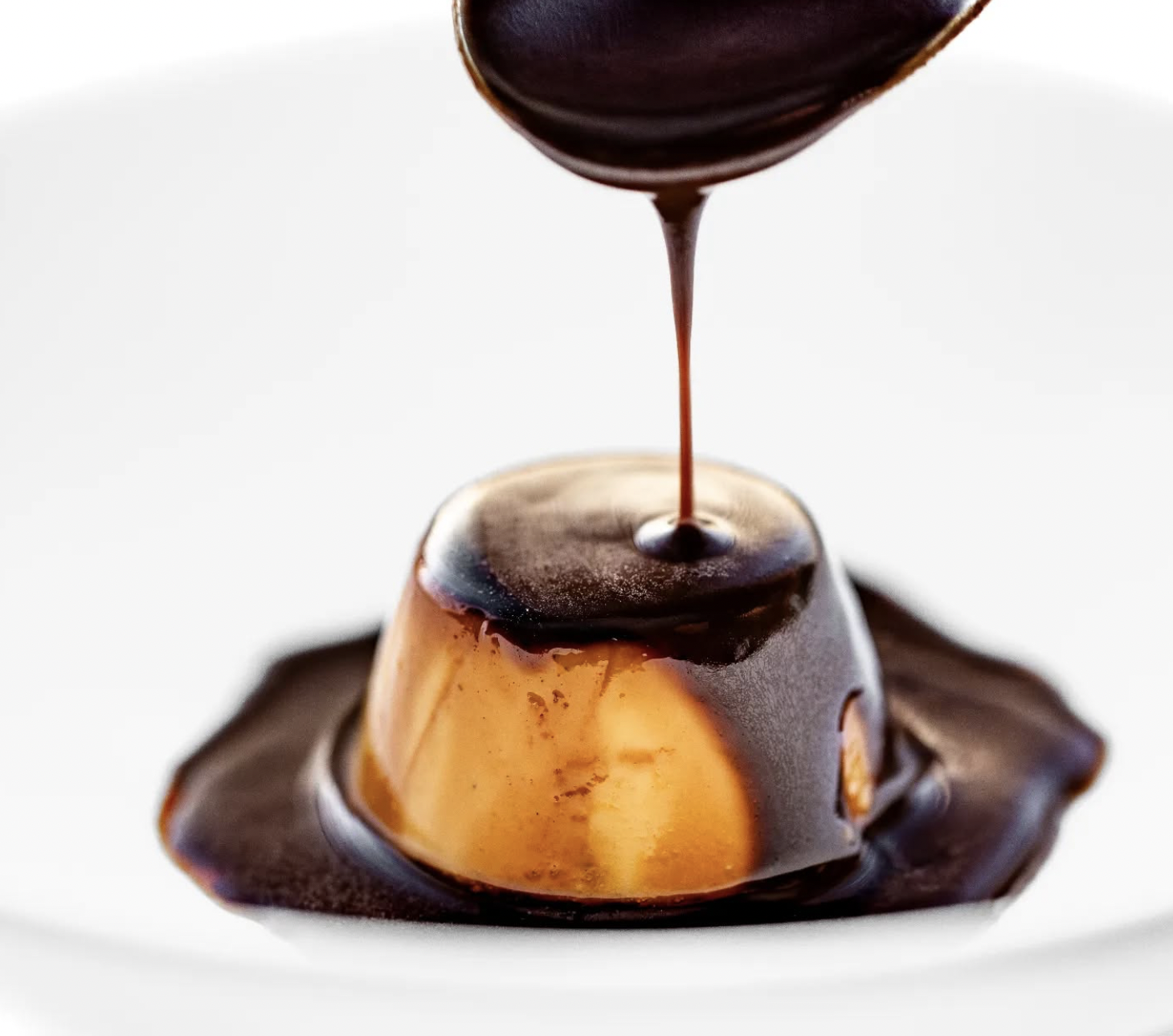
Flan de foie gras
Hablamos en nuestras ponencias durante este pasado 2023, la posibilidad de revisar nuestro anterior trabajo teniendo en cuenta que tenemos cerca de 3800 recetas y todo evoluciona, nosotros también. Nuestra visión y conocimiento es diferente al 2003, año de creación de este flan, hemos eliminado la clara y perfeccionado el sistema de cocción con lo que implícitamente sube el porcentaje de foie gras, acompaña un salsa teriyaki de pollo a la manera tradicional.
Foie gras flan
We talked about the possibility of revising our previous work in our presentations during this past 2023, taking into account that we have nearly 3800 recipes and everything evolves, and so do we. Our vision and knowledge is different from 2003, the year this flan was created. We have eliminated the egg white and perfected the cooking system, which implicitly increases the percentage of foie gras, accompanied by a teriyaki chicken sauce in the traditional way.
Guisante en vaina de vainilla
Combinación de dos tipos de vainas: guisantes lágrima escaldados y colocados cuidadosamente sobre una vaina de vainilla y gelificados en agua de tomate. Como contrapunto ácido, unos puntos de fruta de la pasión.
Un plato que basa su razón de ser en la acción de levantar la vainilla con ambas manos para poder ser degustado, lo cual representa una actitud ante lo desconocido. La combinación de guisante, tomate, vainilla y fruta de la pasión ya la habíamos trabajado antes, pero esta manera de comerlos le da una nueva perspectiva, recuerden que la vainilla es el fruto de una orquídea del mismo nombre.
Peas in vanilla pod
Combination of two types of pods: blanched baby green peas carefully placed on a vanilla pod and gelled in tomato water. As an acid counterpoint, a few dots of passion fruit.
A dish whose raison d’être is based on the action of lifting the vanilla with both hands in order to be able to savour it, which represents an attitude towards the unknown. We had already worked on the combination of peas, tomatoes, vanilla and passion fruit before, but this way of eating them gives it a new perspective. Remember that vanilla is the fruit of an orchid of the same name.
Queso Valleoscuro, chocolate blanco y limón
Un postre que pone en valor el carácter único del queso Valleoscuro, elaborado con leche de cabra pasteurizada y recubierto con ceniza de hueso de aceituna, un método ancestral que conserva y regula su humedad natural.
Originario de Guarromán, Jaén, este queso se presenta sobre una base inflada y aérea, que recuerda a una masa de hojaldre etérea, creando contraste entre ligereza y cremosidad.
Acompañan toques de limón y chocolate blanco, que aportan brillo, dulzor sutil y equilibrio al conjunto.
Valleoscuro cheese, withe chocolate and lemon
This dessert highlights the singular character of Valleoscuro cheese, a pasteurized goat’s milk cheese coated in olive pit ash —a traditional method that preserves and dehydrates the cheese naturally.
Sourced from Guarromán, Jaén, it is served atop a light, airy pastry base, offering a delicate contrast between crispness and creaminess.
Accents of lemon and white chocolate brighten and balance the dish with gentle acidity and sweetness.
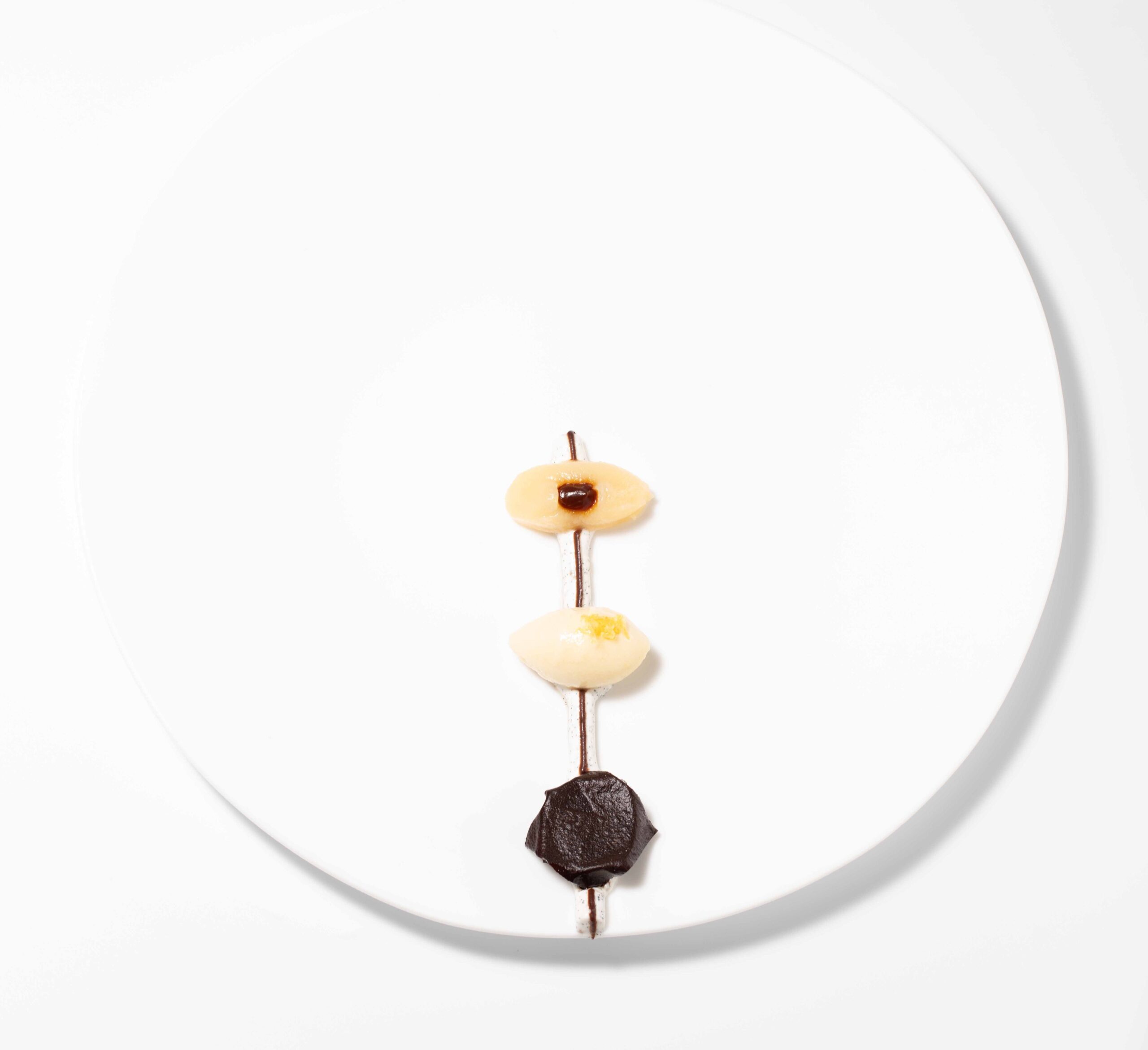
Pera, limón y chocolate
Una mirada contemporánea a un plato creado por el chef en 1998, reinterpretado con sensibilidad y técnica.
Los elementos se unen a través de un delicado cordón de yogur de vainilla, que conecta un puré sedoso de pera, un sorbete helado de piel de limón, y un elegante bombón de té Earl Grey con cobertura de chocolate negro.
Un juego de temperaturas, texturas y aromas que despiertan la memoria y el paladar con equilibrio y sofisticación.
Pear, lemon and chocolate
A contemporary reinterpretation of a dish first conceived by the chef in 1998, brought to life again with nuance and precision.
The components are gracefully linked by a delicate vanilla yogurt ribbon, connecting a silky pear purée, a frozen lemon peel sorbet, and a refined Earl Grey tea bonbon enrobed in dark chocolate.
A harmonious interplay of temperatures, textures, and aromas—reviving memory through elegance and balance.
Polvorón de avellana, fruta de la pasión y chocolate con leche
Polvorón “elBulli” de avellanas, chocolate con leche y fruta de la pasión.
El origen de los polvorones procede de la comunidad andaluza y, concretamente de la Estepa, donde, desde el siglo XVI era habitual usar manteca de cerdo en repostería gracias a la abundancia de encinas en los bosques, hábitat en el que se criaba este animal.
Hazelnut Spanish short bread cookie, milk chocolate and passion fruit
“elBulli” Hazelnut Polvorón with milk chocolate and passion fruit.
The origin of “polvorones” comes from the Andalusian region, specifically the Estepa region, where, since the 16th century, it was common to use lard in baking thanks to the abundance of holm oaks in the forests, the habitat where this animal was raised.
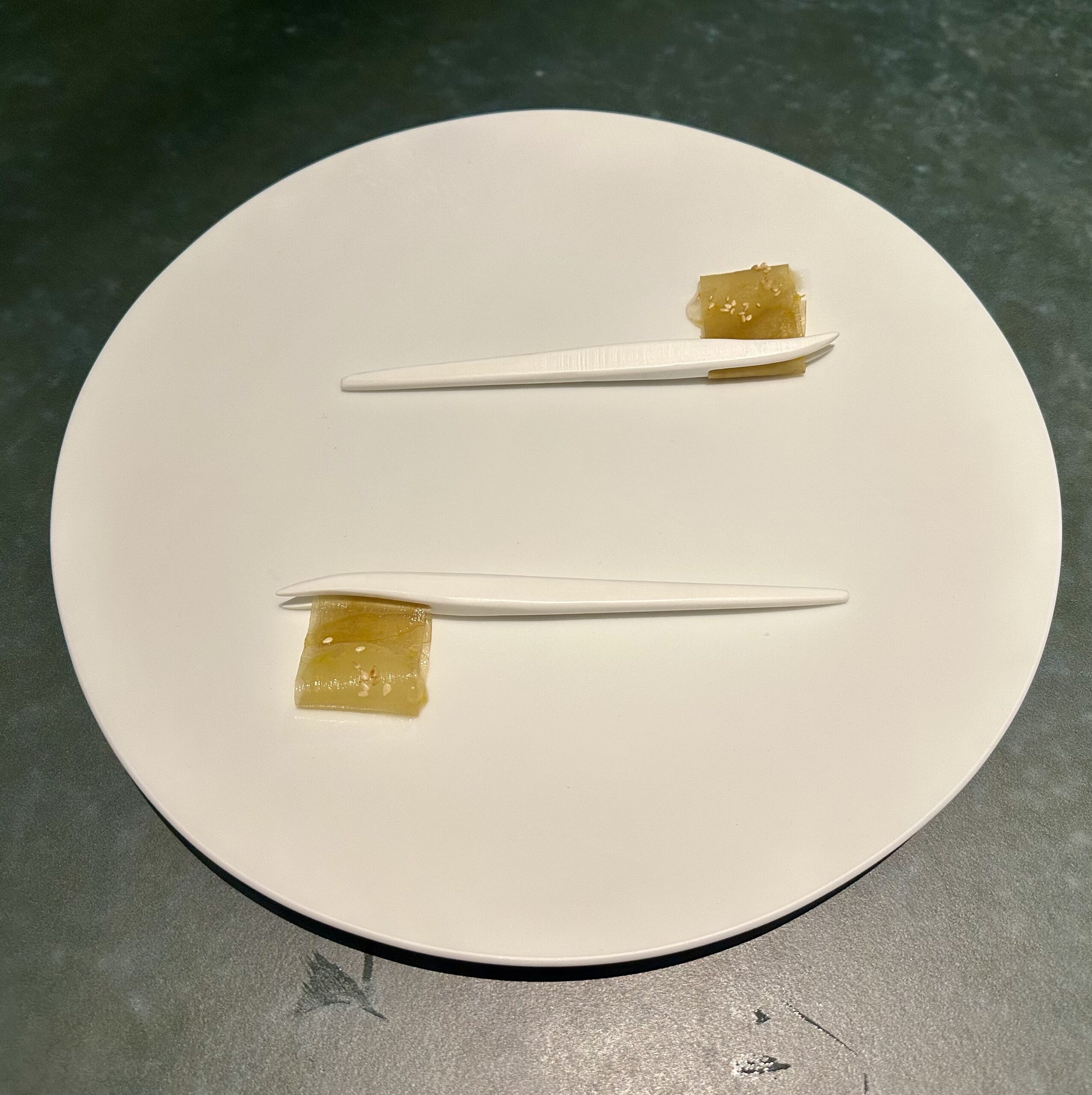
Pañuelo de battera kombu, limón y sésamo blanco
Battera kombu es un tipo especial de alga kombu que ha sido marinada y ablandada, tradicionalmente usada en la elaboración de sushi prensado (oshizushi), especialmente en el famoso battera sushi de Osaka. A diferencia del kombu seco común, que requiere cocción prolongada, el battera kombu ha sido tratado (a menudo con vinagre y azúcar) para volverse más suave, flexible y apto para el consumo directo.
Este kombu no solo aporta sabor umami, sino que también se utiliza como una cobertura decorativa sobre el sushi prensado, aportando una textura aterciopelada y un brillo elegante que contrasta con el arroz y el pescado, generalmente caballa (saba).
Battera Kombu, lemon and white sesame
Battera kombu is a special type of kombu (edible kelp) that has been marinated and softened, traditionally used in the preparation of pressed sushi (oshizushi)—particularly in the well-known battera sushi from Osaka. Unlike regular dried kombu, which requires long cooking times, battera kombu is typically treated with vinegar and sugar to make it tender, pliable, and ready to eat.
This kombu not only enhances dishes with a deep umami flavor, but also serves a decorative role, acting as a delicate topping for pressed sushi. It provides a silky texture and elegant sheen that beautifully contrasts with the vinegared rice and the fish—most often mackerel (saba).
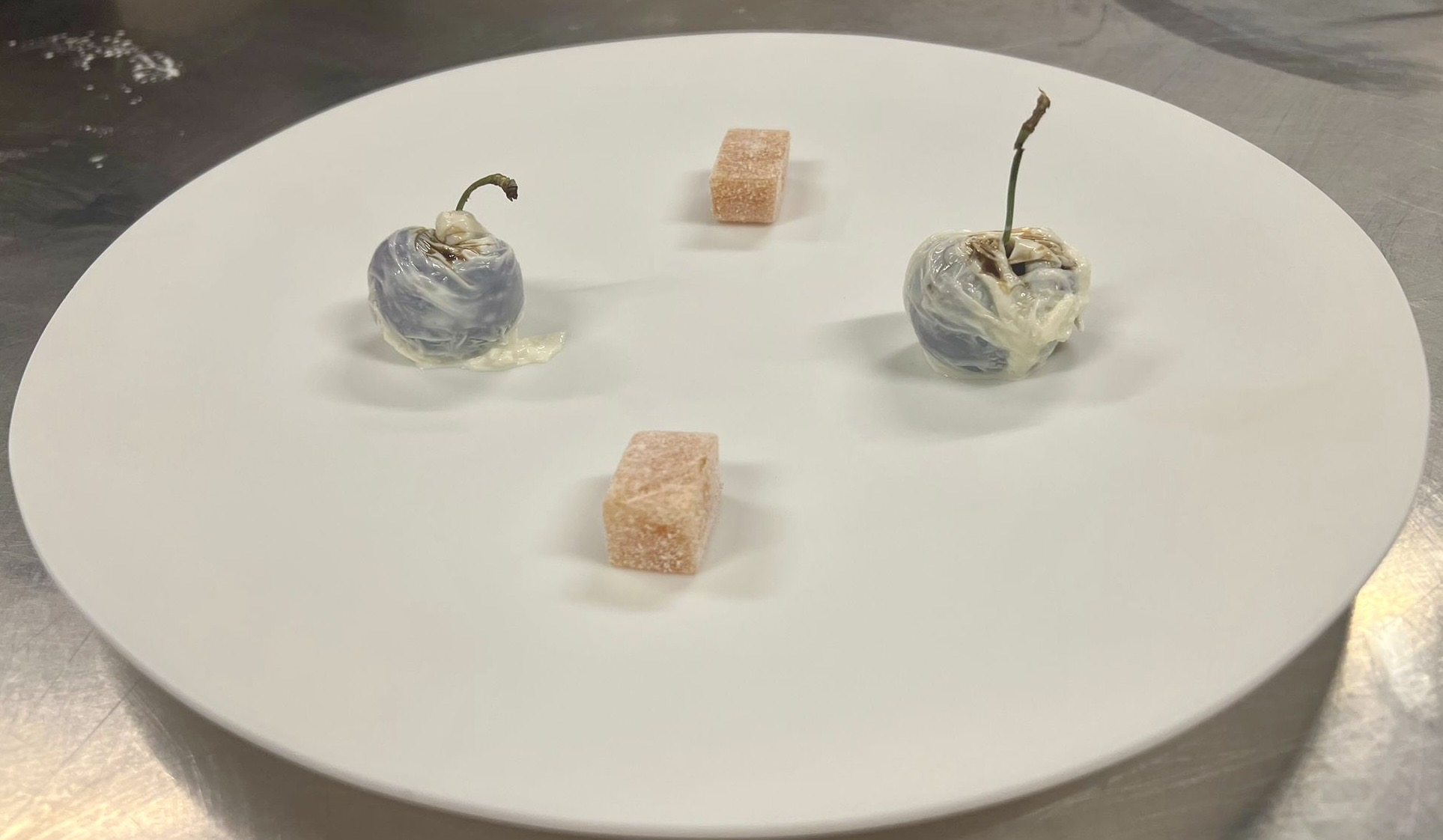
Cereza en vinagre y albaricoque
El albaricoque se presenta en tres formas: cortado, triturado y gelificado. Aprovechando su pectina natural, activada mediante fricción, creamos un membrillo crudo, sin necesidad de cocción, preservando toda su frescura. Lo coronamos con un delicado velo de yogur en polvo que aporta acidez y ligereza.
A su lado, la cereza, servida al natural tras un minucioso deshuesado manual, se envuelve con una yuba elaborada con leche de higuera, aportando notas vegetales y terrosas. El plato se termina con unas gotas de vinagre, que despiertan todos los matices de la fruta y equilibran el conjunto con un sutil contraste ácido.
Cherry in vinegar y albaricoque
The apricot is expressed in three forms: sliced, crushed, and gently gelled. By activating its natural pectin through friction, we create a raw quince-style paste, avoiding the need for cooking and preserving its full freshness. It is finished with a delicate dusting of yogurt powder, adding brightness and a subtle tang.
Beside it, the cherry is served in its purest state — carefully pitted by hand — and wrapped in a fig milk yuba, lending vegetal and earthy undertones. A few drops of vinegar bring balance, awakening the fruit’s complexity with a refined acidic touch.
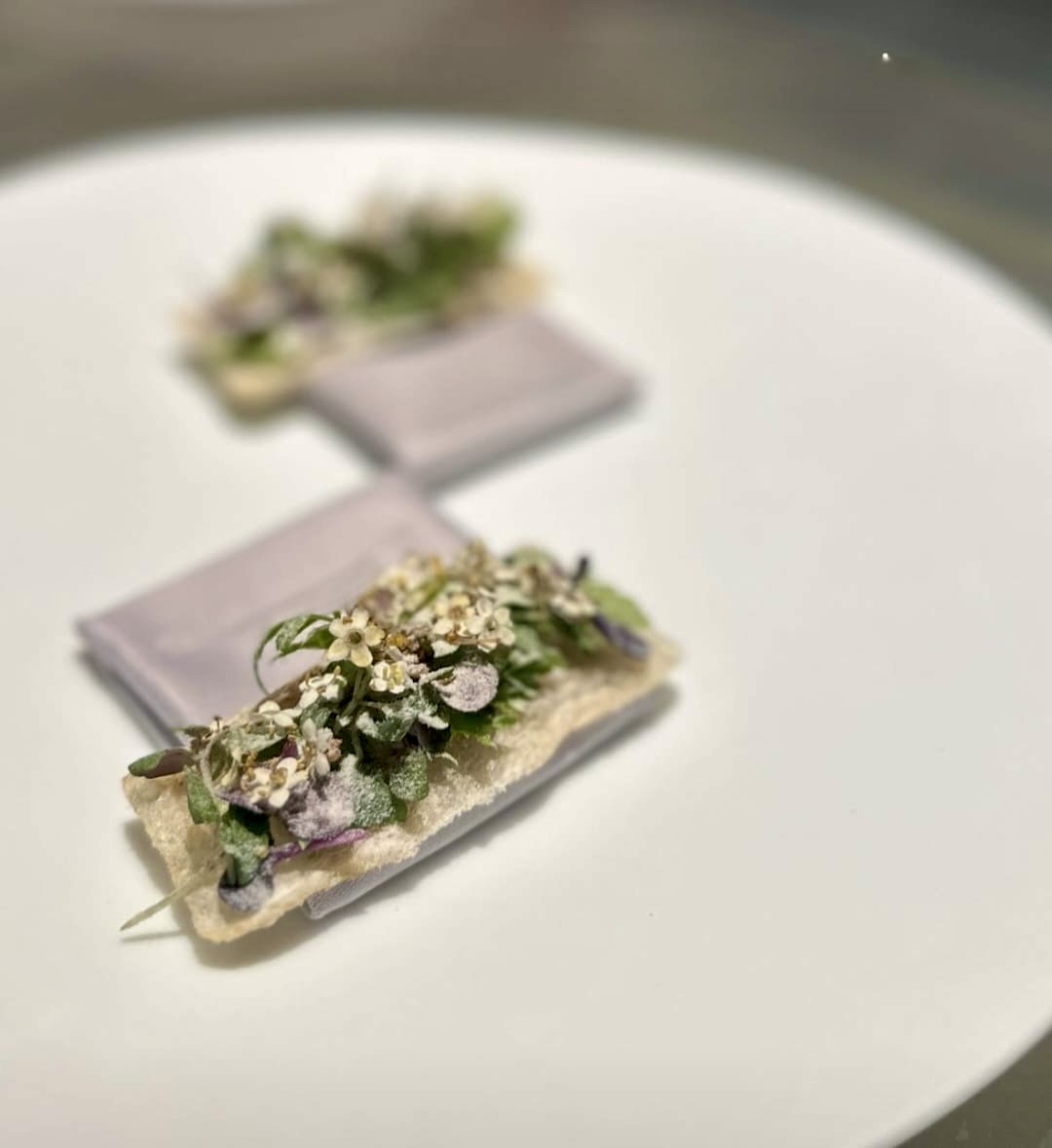
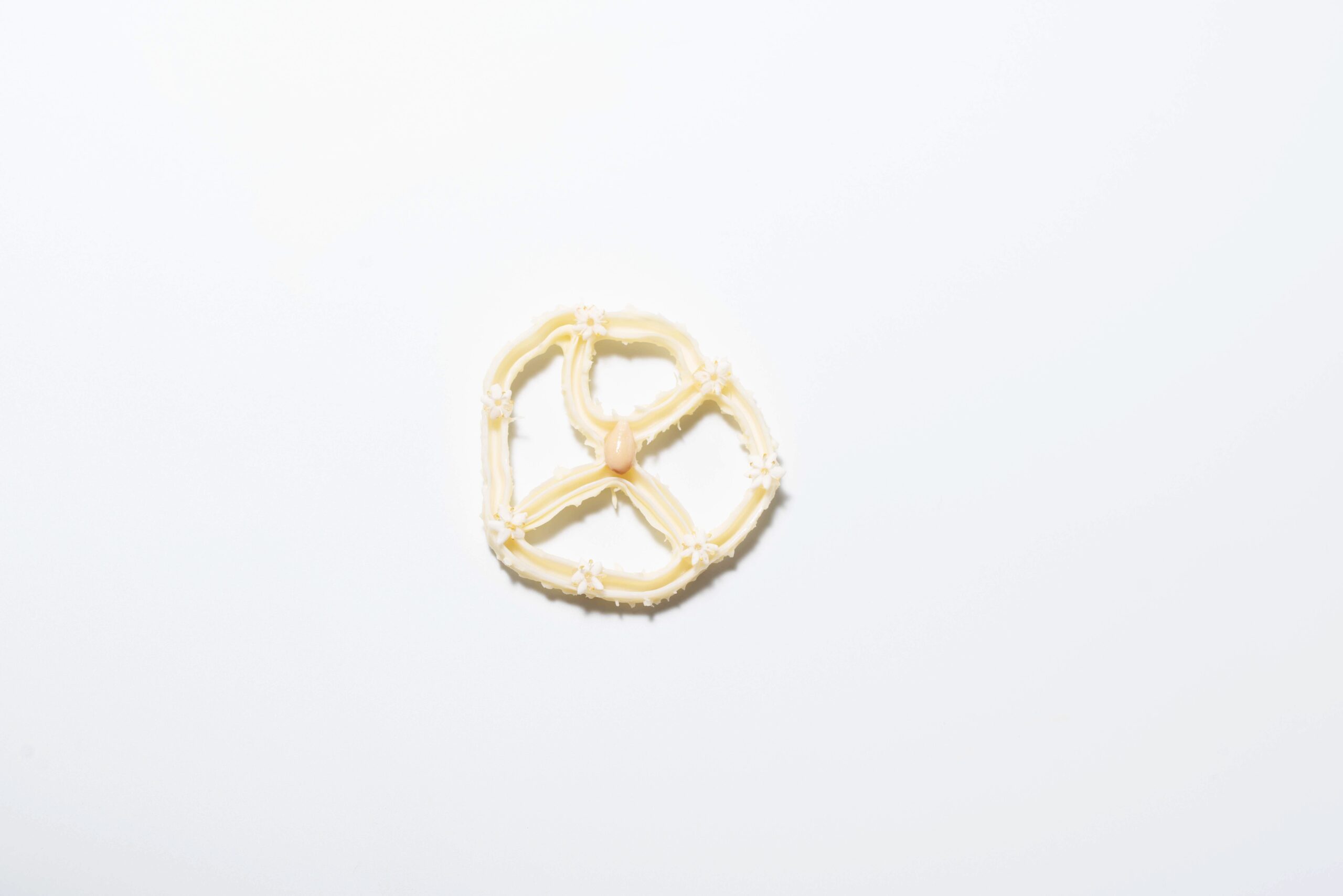
Chocolate blanco, almendra y saüco
Una fina galleta de chocolate blanco sostiene con delicadeza una gelatina de saúco, de textura sedosa y sabor etéreo. Se acompaña de almendra salvaje y flor de saúco fresca, que realzan la composición con notas florales, frescura y elegancia natural.
La flor de saúco, reconocida por su aroma sutilmente dulce y envolvente, aporta un carácter perfumado que envuelve todo el bocado.
White chocolate, almond, and elderflower.
A thin white chocolate wafer delicately supports a silky elderflower jelly, paired with wild almond and fresh elderflower blossom, lending the dish elegance and fragrant freshness.
The elderflower, known for its gently sweet and floral aroma, brings a refined aromatic depth that lingers gracefully on the palate.
Chocolate, café, coco y Chartreuse
Un homenaje a la creatividad delBulli, esta creación reúne texturas contrastantes y aromas profundos: un waffle de cacao tibio acompaña una quenelle de helado coco que aporta un frescor exótico y vibrante.
El pan crujiente de café añade un toque tostado y aireado, mientras que la pasta de café refuerza la intensidad aromática en cada bocado.
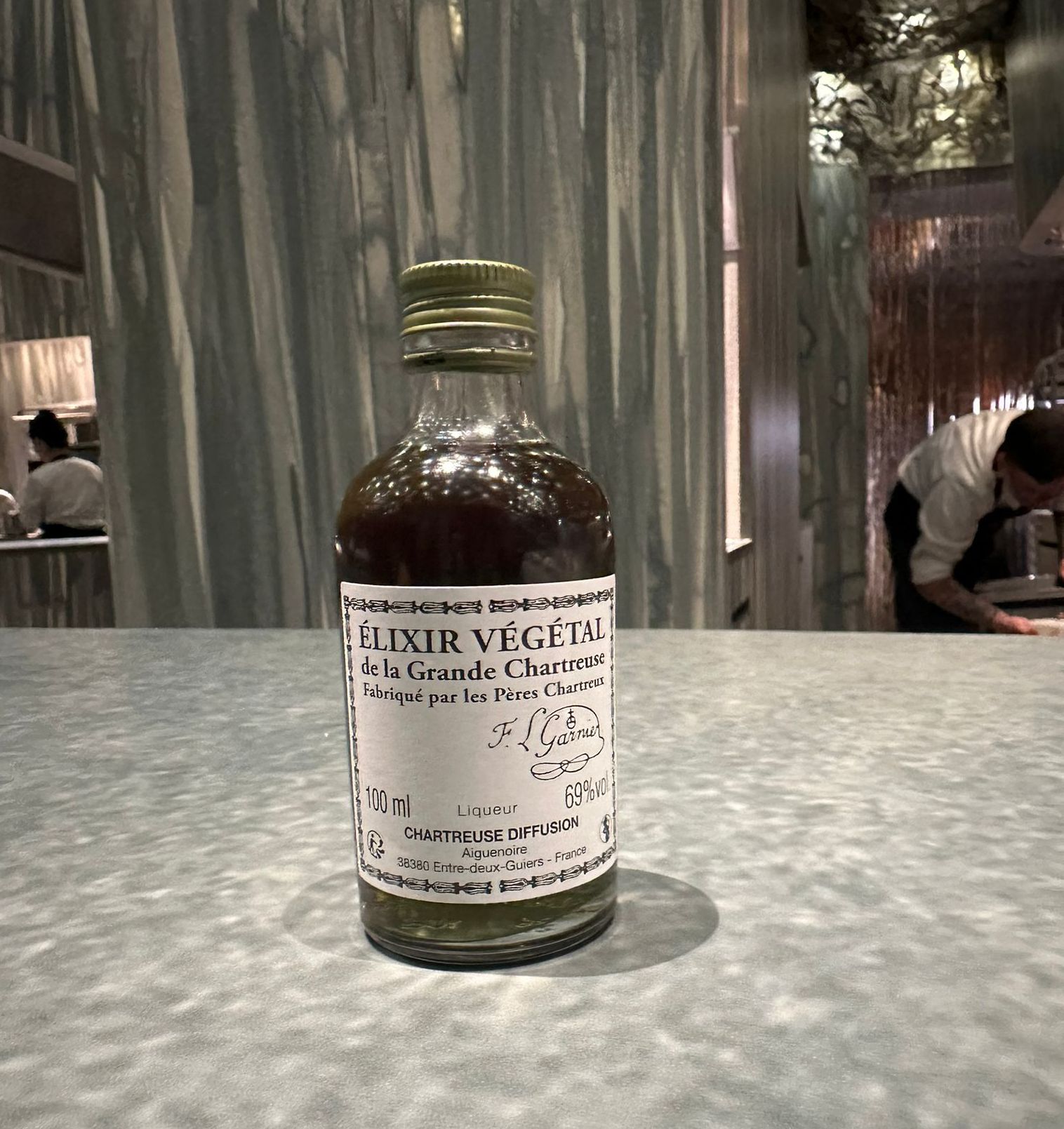
Finalizado en mesa con gotas de Chartreuse.
Una experiencia nostálgica y contemporánea a la vez.
Chocolate, coffee, coconut and Chartreuse
A tribute to the creativity of elBulli, this dessert brings together contrasting textures and deep aromas: a warm cocoa waffle is paired with a quenelle of coconut ice cream, adding an exotic and vibrant freshness.
The crisp coffee bread offers a toasted, airy crunch, while the coffee paste intensifies the aromatic richness of every bite.
Finished tableside with drops of Chartreuse.
A nostalgic and contemporary experience all at once.
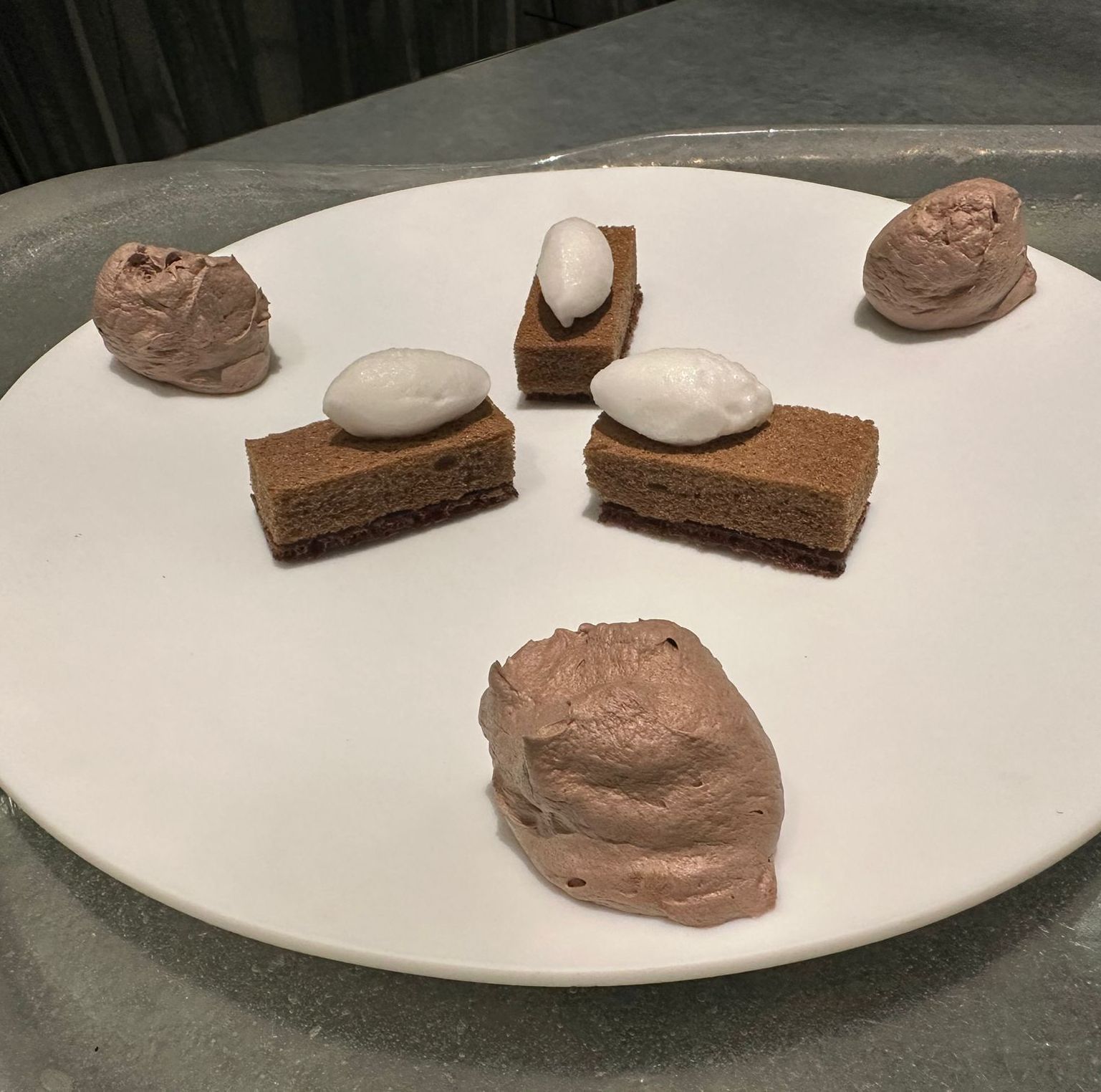
Fondant de chocolate
Cerramos el menú con una mousse de chocolate Guanaja 70%, cuya intensidad ha sido realzada mediante una delicada semi-deshidratación.
Esta técnica concentra los aromas y transforma la textura en algo entre lo etéreo y lo profundo: una última caricia de amargor elegante, firmeza sutil y persistencia sedosa en boca.
Un final sobrio y rotundo, donde el chocolate habla por sí solo.
Chocolate fondant
We end the menu with a 70% Guanaja chocolate mousse, its intensity enhanced through a delicate semi-dehydration process.
This technique concentrates the aromas and transforms the texture into something between the ethereal and the profound: a final caress of elegant bitterness, subtle firmness, and silky persistence on the palate.
A sober yet powerful finale, where the chocolate speaks for itself.